





Designing a faster, student-first application experience

93%
Reduction in application time — from 45 minutes down to under 3 minutes
Role
Director of Product and Design
Company
American Public Education
Product
Enterprise Student Application Platform
Stage
Growth / Optimization

At APEI, the applicaiton experience served two large institutions — American Public University (APU) and American Military University (AMU) — each with distinct student populations but a shared application platform.

Over time, enrollment had become a 45-minute, high-friction process that created confusion, fatigue, and drop-off at the most critical moment of the student journey.

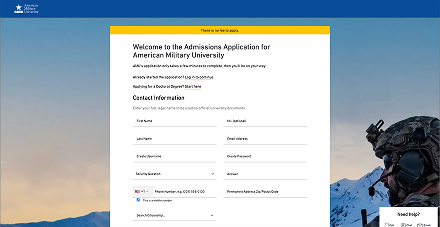
As Director of Product and Design, I led the redesign of this shared enrollment experience, streamlining it to just a few minutes while supporting the unique needs of both civilian and military students.

Understanding The Challenge

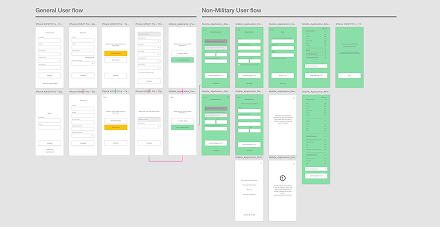
The student application experience for American Public University (APU) and American Military University (AMU) was built as a one-size-fits-all flow, presenting the same experience to military service members, spouses, veterans, and civilian students.

The legacy application:

Took up to ~45 minutes to complete.

Overwhelmed students with dense forms and unclear steps.

Reflected legacy student systems, not student needs.

Failed to support distinct user personas with different requirements and constraints.

Drove high drop-off, especially among working adults and military-affiliated students.

With the experience tightly coupled to legacy systems, even small improvements carried risk. For students, applying felt impersonal and exhausting; for the institutions, it meant abandoned applications at a critical moment.

My Role

As Director of Product and Design, I led the experience direction for a shared student application platform supporting APU and AMU, working as a player-coach alongside a lean design team, Engineering, and executive partners (CCO, CTO, CMO).

My role focused on:

  • Setting experience vision across two brands within a regulated environment.
  • Partnering closely with Engineering to shape feasible, high-impact solutions.
  • Driving alignment from discovery through delivery on a live enterprise platform.

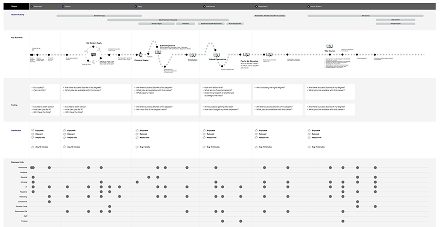
Product & UX Design Process

How hands-on design decisions shaped the student application experience

Goals & Constraints

We aligned early on outcomes that balanced student needs with intitutional realities.

  • Enable students to apply quickly and confidently
  • Clearly communicate what’s required and why
  • Reduce application time while maintaining compliance and data integrity

This alignment helped anchor decisions throughout the process.

Understanding the Problem

We grounded the work in real student behavior and system constraints.

  • One flow served all students, despite distinct personas
  • Applications happened between work, family, or military deployments
  • Requirements were driven by legacy systems, not student context

Key insight: The application wasn’t too complex — it was designed for the institution, not the student.

Experience Principles

We defined a shared lens for evaluating decisions throughout the design process.

  • Student First — built for speed, clarity, and completion
  • Momentum Matters — prioritize fast submission, collecting additional details later
  • Clarity Builds Trust — explain what’s required and why

These principles helped teams make consistent tradeoffs.

Design Strategy & Decisions

We made foundational design choices that shaped the structure of the experience.

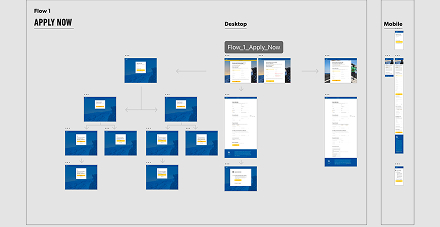
  • Established a one-page application as the primary entry point
  • Standardized post-submission data collection for non-essential information
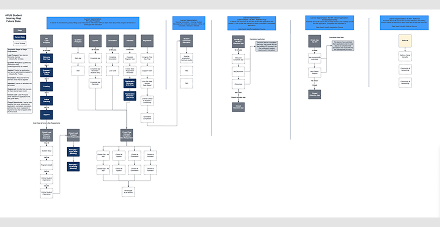
  • Created a shared application flow to support both APU and AMU

These decisions defined how the experience was built.

Design Strategy & Decisions

We validated decisions through rapid, real-world testing before committing to implementation.

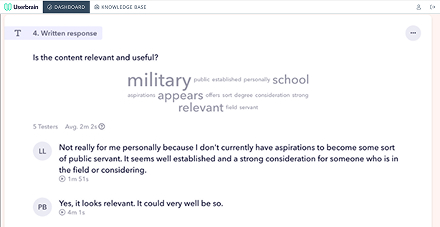
  • Ran unmoderated usability tests with Userbrain
  • Tested interactive prototypes with prospective students
  • Identified friction around sensitive inputs (e.g. Social Security placement)
  • Iterated on sequencing and layout to reduce hesitation

Testing ensured the experience felt clear, safe, and trustworthy.

Collaboration & Leadership

This work required strong cross-functional leadership.

  • Partnered with Engineering on feasibility and delivery
  • Collaborated with Admissions and Compliance on policy constraints
  • Navigated tradeoffs between speed, regulation, and data needs
  • Advocated for student needs at key decision points

My role was transforming the student experience into enterprise reality.

Tools Used

Feedback

"I am a new student. They have made the process of applying and getting started an easy process. They have done a great job at making it a stress-free application and acceptance process."

Freshman Student

January 2023

Impact

Enrollment Impact at Scale

Redesigning the application removed barriers at the most critical moment of the student journey. A faster, clearer experience enabled more students to successfully take the first step.

8,000+

Newly enrolled students following the redesigned application experience.

Application Completion

Simplifying the experience and building early momentum changed student behavior at scale. More students finished once they started.

48%

Lift in application completion rates across APU and AMU.

Speed to Apply

Reducing friction early helped students move through the application with confidence. The experience was designed to fit into real life, not disrupt it.

03Min

Average time to complete the student application.

Student Engagement

Clearer flows and better timing made it easier for students to seek help when needed. Support was integrated without slowing progress.

19%

More leads captured through the live chat feature during the application process.

Enterprise Simplification

These outcomes were achieved by simplifying a complex, regulated system. Changes maintained compliance while reducing cognitive and operational load.

65→20

Reduced required application questions while preserving data integrity and regulatory needs.

Driving Modern, Scalable Enrollment Experiences Within a Legacy Platform

American Military University began its transition to online education in the late 1990s, developing its proprietary student information system, Partnership At a Distance (PAD), to support online applications, orientation, registration, and degree management. While forward-thinking at the time, PAD was not built to support modern, student-centered enrollment experiences at today’s scale.

Within these constraints, I led design strategy focused on transforming the student enrollment experience, aligning Product, Engineering, and business stakeholders around a clear vision for what “modern” should mean within a legacy system. I partnered closely with Engineering to understand platform limitations, guide prioritization, and make informed tradeoffs—improving the experience without disrupting critical academic or operational workflows.

This work delivered immediate gains in clarity, usability, and confidence for prospective students, while establishing a scalable, repeatable approach to enrollment experience design. By pushing the platform where it could stretch, we positioned APEI to continue improving enrollment across institutions and to support future growth, including Spanish-language programs, without requiring a full system rebuild.